
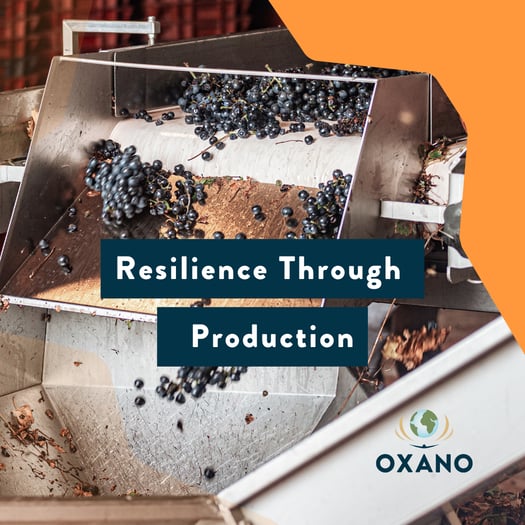
Resilience Through Production
In recent years, global supply chain disruptions from pandemics to geopolitical conflicts have exposed the vulnerability of economies that rely heavily on imports for essential goods. For many African countries, this vulnerability is particularly acute. Large portions of food, pharmaceuticals, fertilizers, machinery, and consumer goods are imported, leaving national economies exposed to currency volatility, trade bottlenecks, and external shocks. Building resilience through local production is not simply about industrial ambition; it is about economic security, employment creation, and long-term structural transformation. Strengthening domestic manufacturing capacity allows African economies to capture more value locally, reduce dependency, and stabilize growth trajectories in an increasingly uncertain global environment.
Local production plays a critical role in retaining value within national and regional economies. When raw commodities are exported and finished goods are imported, much of the value addition and the associated jobs occurs elsewhere. For example, exporting raw cocoa while importing processed chocolate captures only a fraction of the potential economic benefit. By investing in agro-processing, light manufacturing, and industrial value chains, countries can extend domestic value capture. This not only increases GDP contribution from industry but also stimulates linked sectors such as logistics, packaging, services, and technology. Each stage of local production creates multiplier effects: wages support consumption; local suppliers gain contracts, and governments collect tax revenues that can be reinvested in infrastructure and social services.
Resilient production systems also strengthen macroeconomic stability. Many African economies face recurring foreign exchange pressures due to high import bills. Producing essential goods locally, particularly food, fertilizers, building materials, and selected consumer products can reduce import dependency and ease pressure on national currencies. This does not imply isolationism or abandoning global trade. Rather, it suggests strategic localization in sectors critical to economic and social stability. Regional trade frameworks such as the African Continental Free Trade Area (AfCFTA) provide an opportunity to build cross-border production ecosystems where countries specialize within integrated value chains. Regional production clusters can reduce transport costs, improve competitiveness, and foster intra-African trade, which remains significantly below global averages.
Local production also enhances employment resilience, particularly for youth populations. Africa has one of the youngest demographics globally, with millions entering the labor market each year. Manufacturing and agro-processing sectors have higher labor absorption potential compared to capital-intensive extractive industries. Small and medium enterprises (SMEs) in manufacturing often serve as engines of job creation and skills development. Technical training, machinery maintenance, quality control, and supply chain management capabilities all expand through industrial growth. Importantly, building local production ecosystems encourages entrepreneurship, as domestic firms identify gaps in supply chains and develop complementary services. This diversification reduces reliance on a narrow set of export commodities and strengthens economic adaptability.
However, strengthening local production requires more than protective policies. Competitive domestic industries depend on reliable energy, transport infrastructure, access to finance, skilled labor, and supportive regulatory frameworks. High energy costs and logistics bottlenecks can undermine competitiveness even when local demand exists. Therefore, resilience-building strategies must integrate infrastructure investment, industrial policy, workforce development, and access to patient capital. Public-private partnerships and blended finance can play a key role in de-risking early-stage manufacturing ventures. At the same time, sustainable production practices such as renewable energy integration and circular manufacturing models ensure that industrial growth aligns with environmental goals.
Building resilience through production ultimately shifts economies from consumption-driven vulnerability toward value-driven strength. It enables African countries to respond more effectively to global shocks, retain more wealth domestically, and create inclusive employment opportunities. Strategic local production does not mean closing borders; it means strengthening internal capacity while participating more competitively in global and regional markets. In a world marked by uncertainty, resilience is built not only through trade relationships but through the ability to produce, adapt, and innovate locally. For Africa, investing in production is investing in long-term economic sovereignty and sustainable growth.