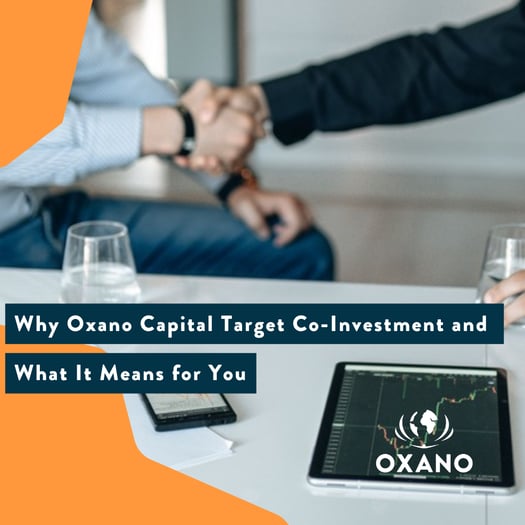
Why Oxano Capital Target Co-Investment and What It Means for You
Growth capital in Africa is scarce, and it is often too small on its own to take a good business all the way from promising to proven. This is one of the main reasons Oxano Capital actively looks for co-investment partners alongside our own capital. This month, we explain what co-investment means, why we pursue it, and how it can benefit businesses in our portfolio.
The financing gap is bigger than any single investor
Access to growth capital remains one of the biggest barriers for many businesses in Africa. Estimates put the financing gap for early-stage African enterprises at around $140 billion, with the continent's total development financing gap estimated at more than $100 billion a year through 2030. Against that, total impact investment into Africa so far is estimated at around $8 billion. The math is simple: no single fund, however well capitalised, can close that gap alone.
This is often called the "missing middle": businesses too large for microfinance, but still too small or too early-stage for large private equity funds. Oxano was built to serve exactly this segment, with investments of up to €1 million per company. But a single-digit-million-euro fund reaching a maximum of €1 million per deal will, by nature, sometimes see opportunities that are bigger than what we can fund alone.
What co-investment means in practice
Co-investment simply means that more than one investor puts capital into the same company, usually on shared or aligned terms. For an investee, this can look like:
- Oxano providing part of a funding round, with one or more additional investors - funds, development finance institutions, or family offices, contributing the rest.
- A staged approach, where Oxano invests first and helps bring in follow-on investors as the business grows.
- Blended finance structures, where commercial capital sits alongside more patient or catalytic capital to reduce risk for everyone involved.
- We may introduce you to other investors we trust, rather than being the only source of capital in a round.
- We stay closely involved even when other investors join, continuing to support you with our knowledge, network, and experience in strategy, planning, governance, and reporting.
- A round with several aligned investors can actually strengthen your business, not complicate it ,as long as the shareholder structure remains sound. We remain attentive to this in every deal we do.
Across the sector, this pattern is increasingly common. Development finance institutions regularly co-invest with private equity and family-run funds to reach underserved markets, and blended structures are increasingly used to bring pension funds, insurance companies, and diaspora capital into deals that would otherwise be seen as too risky to fund alone.
Why we do it
1. It closes the gap between what a business needs and what we can provide alone. Many strong businesses need more capital than our per-company maximum allows, especially as they scale production, expand into new markets, or invest in bigger equipment. Co-investment lets us stay engaged with a company through more of its growth journey, instead of stepping back once our ticket size is reached.
2. It brings in complementary expertise. Different investors bring different strengths: sector expertise, market access, technical assistance, or governance support. When we co-invest, our portfolio companies benefit from more than just capital; they gain a broader network of expertise and relationships.
3. It spreads risk and builds resilience. Spreading a round across multiple investors reduces the risk concentrated in any single relationship. If circumstances change for one investor, a well-diversified cap table gives the business more stability.
4. It signals credibility. When multiple credible investors back to the same company, it sends a strong signal to the market, to banks, and to future investors that the business has been through real scrutiny. This can make it easier to raise further capital down the line.
5. It helps mobilise capital into Africa overall. Every well-structured co-investment shows other investors: including larger and more risk-averse ones — that Sub-Saharan African SMEs are investable. Successful co-investments help build a track record that benefits the whole ecosystem, not just one deal.
What this means for investees
If you are raising capital and talking to Oxano, co-investment may well be part of the conversation. In practice, this means:
- We may introduce you to other investors we trust, rather than being the only source of capital in a round.
- We stay closely involved even when other investors join, continuing to support you with our knowledge, network, and experience in strategy, planning, governance, and reporting.
- A round with several aligned investors can actually strengthen your business, not complicate it,as long as the shareholder structure remains sound. We remain attentive to this in every deal we do.
Oxano Capital view
We invest our own capital, but we also invest our relationships. Co-investment lets us do more of what we set out to do: channel meaningful, patient capital into African manufacturing, agro-processing, and technology businesses, and help them grow into resilient, high-impact companies. If you are scaling a business and think co-investment could be part of your next funding round, we would welcome the opportunity to discuss.