
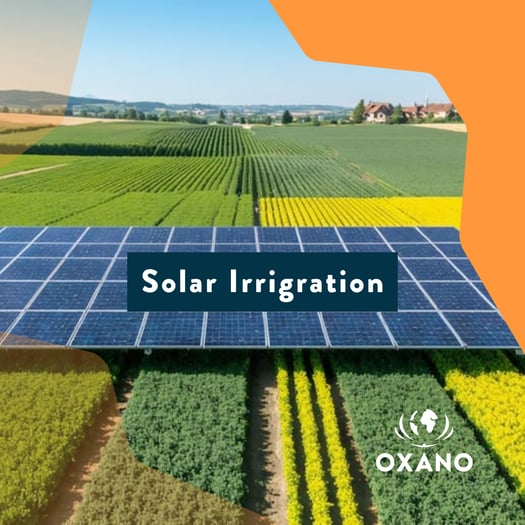
Solar Irrigation in Africa: Powering Climate-Resilient Agriculture
Across sub-Saharan Africa, agriculture remains overwhelmingly rain-fed, leaving millions of smallholder farmers vulnerable to erratic rainfall, prolonged droughts, and shifting weather patterns driven by climate change. While irrigation has long been recognized as a pathway to higher productivity and income stability, traditional diesel-powered pumps are expensive to operate, environmentally damaging, and often inaccessible to small-scale farmers. Solar irrigation presents a transformative alternative. By harnessing abundant solar resources across the continent, solar-powered irrigation systems offer a clean, cost-effective, and scalable solution to improve agricultural productivity, strengthen climate resilience, and expand rural economic opportunity.
The economic case for solar irrigation is particularly compelling in Africa’s rural contexts. Diesel fuel costs are volatile and supply chains are often unreliable in remote areas. Farmers using diesel pumps face high recurring expenses that erode margins and discourage consistent irrigation. In contrast, solar irrigation systems require higher upfront capital investment but have significantly lower operating costs over time. Once installed, sunlight is free. Maintenance costs are relatively low, and system lifespans can extend over many years. Innovative financing models such as pay-as-you-go schemes, asset financing, and group ownership structuresare making solar pumps more accessible to smallholder farmers who cannot afford upfront payments. By shifting irrigation from a variable cost to a largely fixed investment, solar systems increase income predictability and reduce exposure to fuel price shocks.
Beyond cost savings, solar irrigation unlocks productivity gains that can be transformative. Reliable access to water allows farmers to cultivate during dry seasons, diversify into higher-value horticultural crops, and increase cropping intensity throughout the year. This transition from subsistence rain-fed farming to market-oriented irrigated production can significantly raise incomes. Horticulture such as tomatoes, onions, leafy greens, and fruits often commands higher market prices than staple crops. Solar irrigation enables farmers to meet urban demand more consistently, improving food supply stability in rapidly growing cities. In water-scarce regions, pairing solar pumps with drip irrigation systems enhances water-use efficiency, ensuring that productivity gains do not come at the cost of resource depletion.
However, scaling solar irrigation responsibly requires careful resource management and ecosystem planning. While solar power reduces carbon emissions compared to diesel, uncontrolled groundwater extraction can lead to aquifer depletion and long-term environmental stress. In some regions, the affordability of solar pumps may unintentionally accelerate unsustainable water use if not paired with monitoring systems and community-based water governance frameworks. Smart metering technologies, groundwater mapping, and farmer education programs are essential to balance productivity gains with sustainability. Integrating solar irrigation into broader watershed management strategies ensures that climate adaptation efforts do not create new ecological vulnerabilities.
The broader development implications of solar irrigation are substantial. Access to irrigation reduces climate risk, which in turn improves farmers’ creditworthiness and bankability. Financial institutions are more likely to lend to farmers with predictable production cycles. This can catalyze broader agricultural investment ranging from improved seeds and fertilizers to cold storage and logistics infrastructure. Solar irrigation also contributes to gender inclusion in agriculture. In many African communities, women are responsible for small-scale farming but face barriers to accessing productive assets. Group-based financing models and targeted inclusion strategies can ensure women benefit from irrigation technologies, strengthening household incomes and food security.
For impact investors and ecosystem builders, solar irrigation sits at the intersection of climate mitigation, climate adaptation, and economic inclusion. It reduces emissions, increases resilience to weather shocks, and enhances rural livelihoods. Yet impact depends on long-term partnership models that combine technology deployment with financing, training, after-sales service, and water governance. Hardware alone is not enough; adoption, maintenance, and responsible usage determine outcomes.
Africa possesses some of the highest solar radiance levels in the world. Leveraging this natural advantage to power agriculture is both logical and strategic. Solar irrigation represents a structural shift toward energy-independent, climate-resilient farming systems. When embedded within sustainable water management frameworks and inclusive financing models, it has the potential to redefine how smallholder agriculture adapts to a warming world while driving inclusive economic growth.