
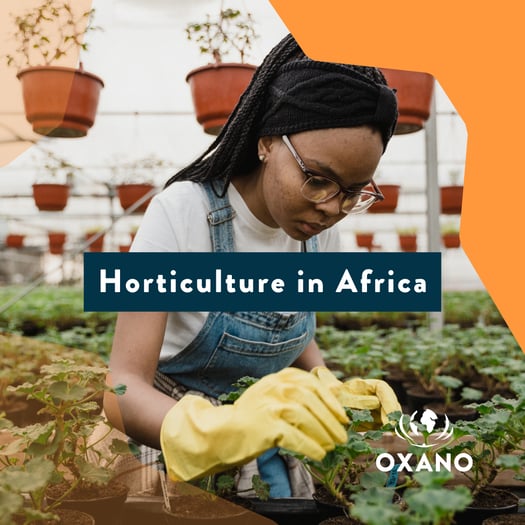
Horticulture in Africa
Horticulture represents one of the most dynamic and high-potential segments of Africa’s agricultural sector. Unlike staple crops, which are often grown for subsistence or low-margin markets, horticultural products are typically higher value, more labor-intensive, and closely linked to urban consumption and export markets. As Africa urbanizes rapidly and middle-class demand for diversified diets rises, horticulture is becoming increasingly central to food systems' transformation. At the same time, global markets continue to seek off-season produce, offering African producers export opportunities in Europe, the Middle East, and beyond. When supported by the right infrastructure, financing, and policy environment, horticulture has the potential to significantly increase farmer incomes, create rural employment, and strengthen trade competitiveness.
One of horticulture’s greatest strengths lies in its income-generating potential for smallholder farmers. High-value crops such as tomatoes, onions, peppers, avocados, mangoes, berries, and cut flowers can generate several times the revenue per hectare compared to staple crops like maize or sorghum. Short production cycles, particularly vegetables, enable multiple harvests per year, creating more consistent cash flow. This income regularity is critical for smallholders who face irregular earnings and limited access to formal credit. Moreover, horticulture tends to be labor-intensive, supporting job creation across planting, harvesting, grading, packaging, and processing. Women and youth, who are often excluded from land-intensive staple farming systems, frequently participate more actively in horticultural value chains, making the sector particularly important for inclusive growth.
However, horticulture is also more sensitive to systemic weaknesses in African agricultural ecosystems. Perishability is a defining characteristic: fruits and vegetables require efficient cold chains, reliable transport, and timely market access. Without adequate storage and logistics infrastructure, post-harvest losses can reach 30–50%, eroding farmer profitability and increasing food waste. Access to quality inputs such as improved seeds, fertilizers, irrigation systems, and pest management solutions is equally crucial. Climate variability further compounds risk. Temperature extremes, irregular rainfall, and emerging pests can significantly impact yields and quality. Therefore, scaling horticulture sustainably requires integrated investment across irrigation, cold storage, aggregation hubs, logistics networks, and extension services rather than isolated interventions.
Climate resilience is both a challenge and an opportunity within horticulture. On one hand, many horticultural crops are highly sensitive to weather fluctuations. On the other hand, controlled-environment agriculture such as greenhouses, shade nets, and drip irrigation can improve water efficiency and reduce climate exposure. Solar-powered irrigation systems, precision agriculture tools, and digital advisory platforms are increasingly helping farmers optimize input use and manage risk. In export-oriented segments, compliance with international standards around pesticide residues, traceability, and quality control is becoming essential. Digital traceability systems and farmer training programs can enable smallholders to meet these requirements and access premium markets. By combining climate-smart practices with strong market linkages, horticulture can shift from a high-risk activity to a resilient income engine.
From an investment perspective, horticulture offers compelling opportunities but requires patient, ecosystem-oriented capital. Financing must address not only farm-level production but also aggregation centers, packhouses, cold chains, and processing facilities. Blended finance models can help de-risk infrastructure investments while enabling private sector participation. Export-focused horticulture clusters when supported by reliable logistics corridors and phytosanitary systems can strengthen foreign exchange earnings and improve national trade balances. At the same time, domestic urban markets remain underdeveloped and present significant potential for structured supply chains that connect rural producers to growing cities.
Ultimately, horticulture in Africa represents a pathway to move agriculture up the value chain from subsistence production toward market-driven, diversified, and income-generating systems. Its success depends on coordination across infrastructure, finance, technology, and policy. When embedded within resilient value chains and supported by long-term partnerships, horticulture can play a transformative role in improving nutrition, increasing farmer incomes, empowering women and youth, and strengthening Africa’s position in global agricultural markets.