
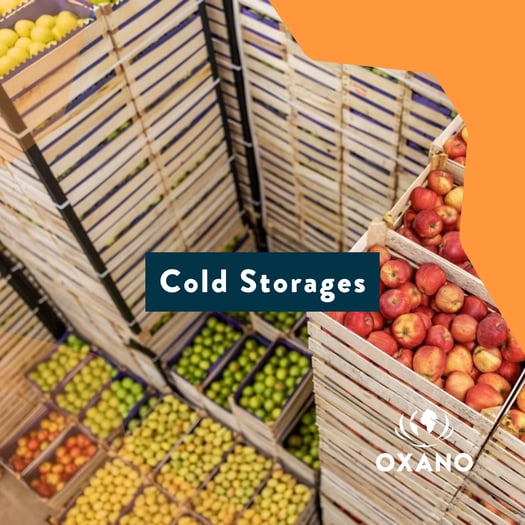
Cold Storages
Cold storage is one of the most underdeveloped yet transformative pieces of agricultural infrastructure in Africa. Across the continent, post-harvest losses for perishable crops such as fruits, vegetables, dairy, fish, and meat often range between 30% and 50%, largely due to inadequate storage, poor transportation systems, and unreliable electricity. For smallholder farmers who produce the majority of Africa’s food this translates into lost income, price volatility, and weakened bargaining power. Without cold storage, farmers are forced to sell immediately after harvest when supply is high and prices are low, creating a structural disadvantage that perpetuates rural poverty. Cold storage is therefore not merely a logistics upgrade; it is a market power equalizer. By extending shelf life, stabilizing quality, and enabling aggregation, cold storage allows farmers and agribusinesses to access higher-value markets, reduce waste, and smooth supply across seasons.
The structural challenges behind cold storage development in Africa are complex. Reliable electricity access remains limited in many rural regions, and diesel-powered systems are expensive and environmentally unsustainable. Capital expenditure for cold rooms, refrigerated trucks, and packhouses is high, while utilization rates are often uncertain due to fragmented supply chains. Moreover, cold storage infrastructure requires technical expertise for maintenance and temperature management skills that are scarce in many agricultural communities. Financing is another barrier. Traditional lenders often perceive cold chain infrastructure as high-risk because revenues depend on farmer adoption, market linkages, and aggregation efficiency. As a result, the cold chain gap is is a systems problem involving energy access, finance, aggregation models, and logistics coordination.
However, innovative models are beginning to reshape the landscape. Solar-powered cold rooms are emerging as a promising solution in off-grid and weak-grid environments, significantly reducing operational costs and carbon emissions. Pay-as-you-store and pay-per-crate models are lowering entry barriers for smallholder farmers, allowing them to access cold storage without large upfront payments. Mobile cold storage units positioned near aggregation hubs or markets are reducing transport-related spoilage. Digital platforms are increasingly integrated with cold storage facilities to manage bookings, monitor inventory, and optimize demand forecasting. In East and West Africa particularly, startups are building integrated cold chain ecosystems linking farmers to buyers, providing logistics services, and embedding cold storage as part of a broader market access solution rather than as a standalone asset. This systems-based approach improves utilization rates and enhances bankability, making cold storage more attractive to blended finance and impact investors.
Ultimately, cold storage in Africa represents one of the most direct pathways to improving food security, farmer incomes, and climate resilience. Reducing post-harvest losses not only increases available food supply without expanding farmland, but also lowers the carbon footprint associated with wasted production. For impact-oriented capital, cold chain investments align strongly with multiple Sustainable Development Goals: poverty reduction, zero hunger, climate action, and economic growth. Yet sustainable impact requires long-term partnership models rather than short-term infrastructure deployment. Cold storage facilities must be embedded within reliable supply chains, supported by farmer training, and financed through patient capital that understands agricultural seasonality and adoption curves. When properly integrated, cold storage transforms agriculture from a volume-driven survival system into a quality-driven value system unlocking Africa’s potential to move up the agricultural value chain while strengthening rural livelihoods.